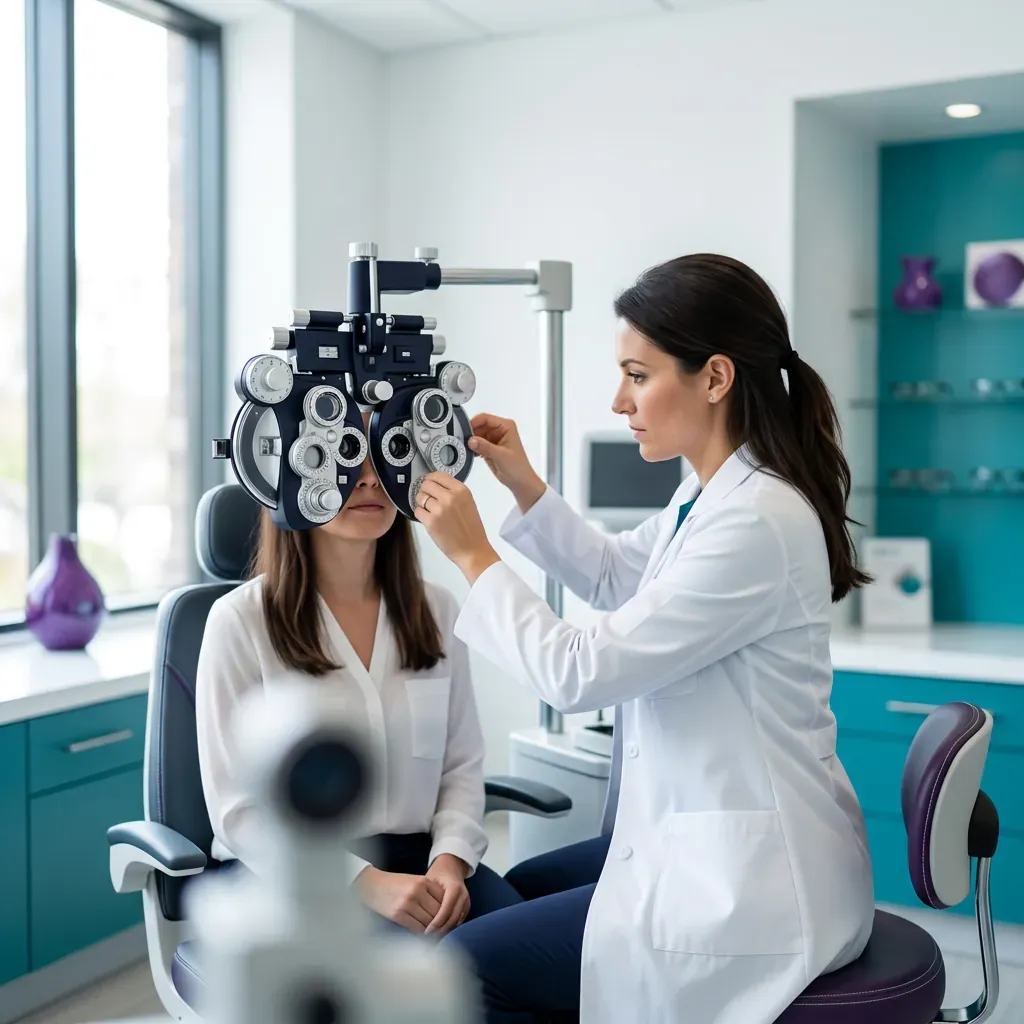

An optometry practice website has three jobs: help nearby patients find you, give them reasons to trust you, and make booking an appointment fast and easy. If your site loads slowly, hides your phone number, or doesn’t say which insurance you accept, patients will call the practice down the street instead.
What should every optometry website include?
Patients visit your site with a few specific questions. The best practice websites answer them within seconds:
- Online booking or a clear way to request an appointment, visible on every page, especially on phones.
- Insurance and vision plans you accept. This is one of the first things patients look for.
- Services, from routine eye exams and contact lens fittings to dry eye treatment, myopia management or specialty care.
- Your doctors, with photos and short bios. People choose a doctor, not just a practice.
- Hours, location, parking and phone number, easy to find and tap to call.
- Your eyewear, frame brands and optical services, if retail is part of your practice.
- Reviews and real photos of your office and team, which build trust faster than stock images.
How do patients find an eye doctor online?
Most patients start with a search like “eye doctor near me” or “optometrist in [town]”. A few things decide whether your practice shows up:
- Your Google Business Profile. Accurate hours, categories, photos and a steady flow of recent reviews matter as much as your website for local searches.
- Local search basics on your site. Clear page titles, a page for each service, and your practice name, address and phone number matching everywhere they appear online.
- AI answers. More patients now ask tools like Google’s AI Overviews or ChatGPT for recommendations. These tools favor sites that answer common questions plainly, so a clear services page and a helpful FAQ now pull double duty.
Why do speed and accessibility matter?
Most patients will visit your site on a phone, often while doing something else. A page that takes more than a few seconds to load loses people before they see your booking button, and site speed is part of how Google ranks pages.
Accessibility matters too. Patients with low vision are, by definition, part of your audience, so readable text, strong color contrast and a site that works with screen readers aren’t extras. Inaccessible websites are also a common target for ADA demand letters, which is an avoidable cost and distraction.
Should you build it yourself, use a template, or work with a partner?
- Do it yourself with a website builder if you’re just starting and have the time. The tradeoff is that updates, speed, security and search visibility all become your job.
- Industry templates are quick to launch, but many practices end up with nearly identical sites, and you may not own the site if you leave the vendor.
- A partner builds a site around your practice and keeps it fast, secure and up to date, so it keeps working after launch day. As a master service provider, JoinODx builds and runs practice websites alongside IT and HR, so your site, systems and team all work together.
What should you ask a website provider?
- Who owns the website, the domain and the content if we part ways?
- How do patients book or request appointments, and is patient information kept secure?
- How fast is the site on a phone, and how do you measure it?
- Who makes updates, and how quickly?
- How will you help us show up in local search, and how will we know it’s working?
If you’d like a second opinion on your current site, see how we handle websites and marketing or get in touch.